
If you’ve ever paid $2,000/month for SEO, gotten zero jobs, and still wondered, “What’s the best way to market a roofing company?” Then this one’s for you.
The trades world doesn’t run on impressions and click-throughs; it runs on booked jobs and answered phones. In this post, we expose how most marketing agencies miss the mark entirely, what you should measure instead, and how to build a system that generates real leads, not “awareness.”
The Problem With Agency Metrics
Marketing agencies love to talk about impressions, clicks, and traffic. But ask yourself, did any of those pay the bills last month?
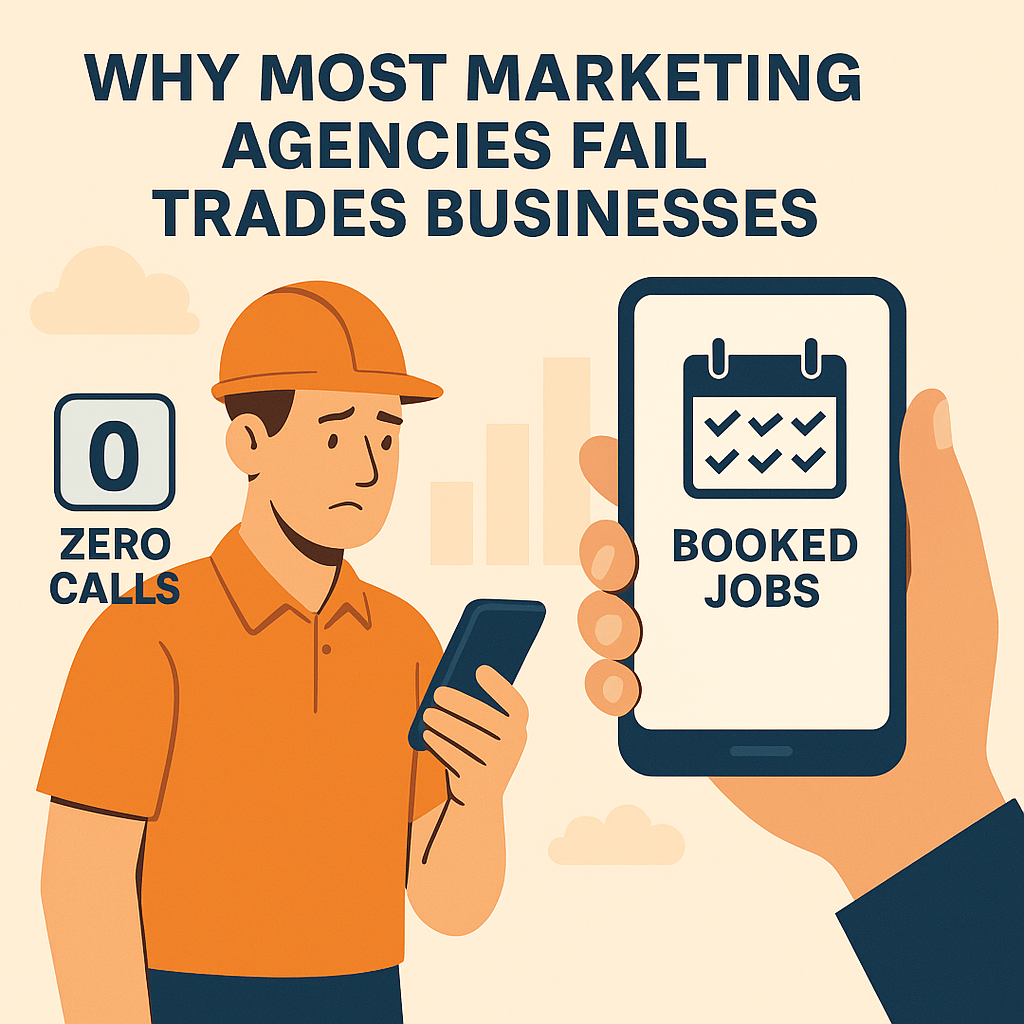
- Impressions don’t pay invoices. A million people scrolling past your ad means nothing if no one calls.
- Clicks don’t equal calls. Just because someone clicked a blog post doesn’t mean they’re ready to book a roofing job or plumbing repair.
- Rankings don’t guarantee revenue. Being on page one of Google doesn’t matter if your phone isn’t ringing.
Agencies often measure success by what looks good on paper, but trades businesses survive on something far more tangible: jobs in the pipeline.
What is the best way to market a roofing company?
Trade owners don’t care about marketing lingo. They care about:
- Phone calls that get answered
- Booked jobs in the calendar
- Repeat customers and referrals
Real marketing for trades should focus on the bottom line. This means:
- Lead flow tracking: Every lead should be captured, tracked, and followed up.
- Call and conversion monitoring: How many calls did marketing generate? How many turned into jobs?
- Return on spend: For every dollar spent on ads or SEO, how many dollars came back?
Why Agencies Miss the Mark on Trades
Most agencies are built for e-commerce, SaaS, or big brands. They don’t understand trades-specific challenges:
- Emergency jobs need fast response systems, not slow drip campaigns.
- Local markets demand geo-targeted ads, not generic awareness campaigns.
- Crews need steady job flow, not seasonal spikes followed by silence.
When agencies fail to adapt to these realities, trades businesses end up paying thousands for marketing that doesn’t move the needle.
What You Should Measure Instead
Instead of letting agencies sell you on “awareness,” track the numbers that actually matter:
- Cost per lead (CPL): How much did it cost to get one person to call?
- Cost per booked job (CPBJ): Out of those leads, how much did it cost to land actual work?
- Lifetime customer value (LCV): How much revenue will one happy customer bring through referrals and repeat jobs?
- Answer rate: Are phone calls being answered and booked, or wasted?
These metrics tell the real story of whether marketing is profitable or just expensive noise.
Building a System That Works
The answer isn’t another “marketing package.” It’s a system built around trades businesses:
- Integrated lead capture (website forms, calls, ads → directly into CRM)
- Call tracking (record every lead source and measure conversion rates)
- Follow-up automation (text reminders, call backs, email sequences)
- On-the-ground alignment (crews ready to fulfill the jobs being booked)
When you measure what matters, marketing becomes a growth engine, not a gamble.
Conclusion: Stop Paying for Awareness, Start Building Job Flow
Most marketing agencies fail trades businesses because they chase the wrong metrics. Impressions, clicks, and rankings might impress a boardroom, but they don’t put food on the table for tradesmen. You need a marketing partner that understands booked jobs, answered phones, and steady lead flow.
At Blue Collar Dreams, we’ve been in the field, running crews, answering calls, and building systems that keep trades businesses busy and profitable. If you’re tired of paying for “awareness” and ready to start scaling with real results, let’s talk.